
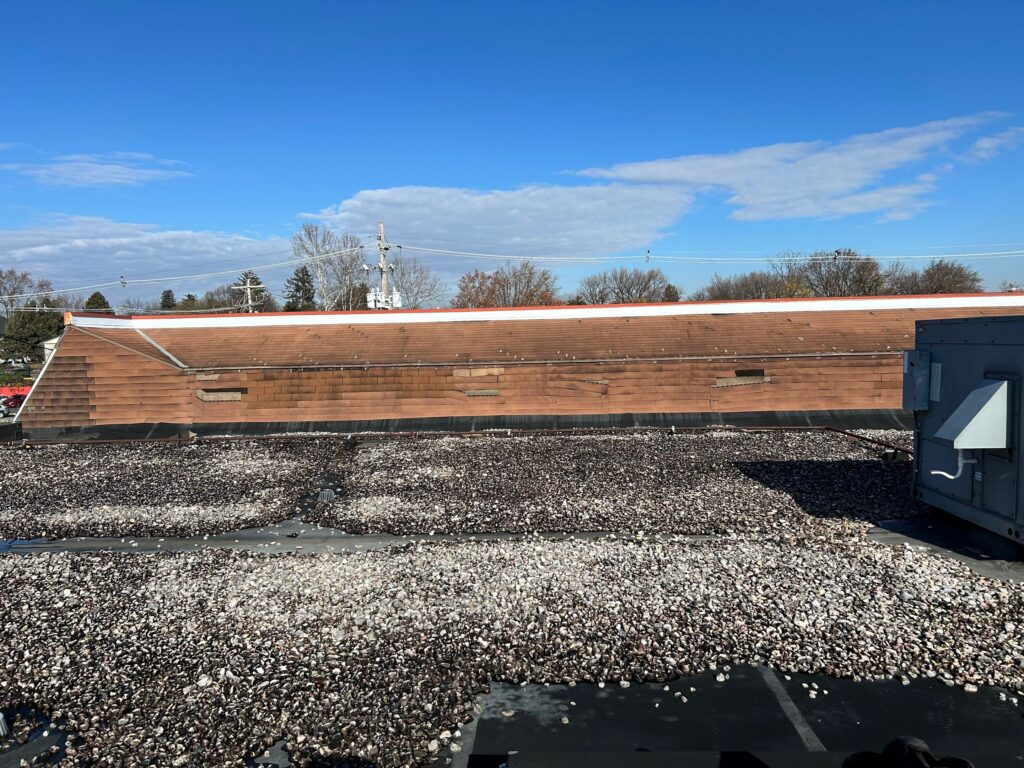
Office Building Roofing in Boise, ID
Commercial roofing for office buildings, professional parks, and corporate campuses.
The Micron Technology headquarters campus on North Cole Road in Boise is a working example of the Class A office environment where roofing decisions carry aesthetic, environmental, and tenant satisfaction dimensions that go far beyond simple waterproofing. Boise's commercial office market has grown dramatically alongside the technology sector expansion in the Treasure Valley, and building owners managing Class A and B office properties along the Connector, in the downtown core, and in the Meridian tech corridor face a roofing environment that demands coordination with occupied floors, compliance with Idaho's commercial energy code, and sensitivity to the visual standards that tenants and ownership groups expect from well-maintained professional office buildings.
Occupied-building protocols are the first operational discipline that separates qualified commercial roofers from contractors who work primarily on unoccupied industrial buildings. Reroofing an active Boise office building requires a pre-construction meeting with the property manager and tenant representatives to establish noise restriction hours, access coordination procedures, and a written emergency contact protocol for roof leak reports during the construction period. Tear-off operations that generate significant vibration and debris must be confined to phases and hours that the tenant committee has approved, and temporary weathering protection must be installed at the end of every workday to ensure that an unforecast rain event does not reach the occupied floors below.
Aesthetics and green roof options are increasingly relevant for Boise's Class A office market, where tenants competing for technology talent use their workplace environment as a recruitment and retention tool. Green roof assemblies—either extensive sedum systems or intensive planted decks—are structurally feasible on Boise's office buildings when the structural engineer confirms adequate deck capacity, and they provide both a visual amenity for occupied upper floors looking down onto lower roof sections and a meaningful reduction in rooftop heat gain through the evapotranspiration effect of living plant material. Cool roof assemblies using white TPO or PVC membrane provide a more economical alternative to green roofs while still delivering the urban heat island mitigation and energy efficiency benefits that sustainability-conscious tenants and building certifications require.
Multi-RTU and HVAC coordination is one of the most complex project management challenges on a Boise office building reroofing project because large Class B and Class A office buildings routinely have 15 to 30 rooftop HVAC units serving different tenant zones. Replacing membrane beneath and around each unit requires either temporary disconnection of the unit—with HVAC contractor involvement, tenant coordination, and often temporary cooling provisions—or careful phasing of the membrane work to address the unit curb flashings without disrupting the unit's operation. Idaho-licensed HVAC contractors must be involved in any work that involves disconnecting refrigerant lines or making electrical connections to rooftop unit circuits, and the roofing contractor's project schedule must account for HVAC contractor availability.
Local energy code compliance in Idaho is governed by the Idaho Division of Building Safety's adoption of the IECC commercial energy provisions, which require minimum continuous insulation R-values for commercial roof assemblies. For Class A office buildings in Boise, the applicable R-value requirements position polyisocyanurate insulation at two to three inches as the minimum practical thickness, and forward-thinking building owners often specify additional insulation depth as part of a reroofing project to improve the building's ENERGY STAR score, which affects operating cost benchmarking and is increasingly reviewed by commercial tenants during lease negotiations. ASHRAE 90.1 compliance is the standard reference for mechanical engineers reviewing the impact of roof assembly changes on building energy model calculations.
Reflective and cool membrane selection for Boise office buildings must account for the city's mixed climate—hot, sunny summers and cold winters—which creates a condition where membrane reflectance provides meaningful summer cooling load reduction but also reduces the passive solar heat gain through the roof in winter. For single-story or low-rise Boise office buildings where the roof surface represents a large share of the thermal envelope, an energy model should be run to confirm that the net annual benefit of a reflective membrane is positive before specifying it solely on the basis of its cooling-season performance. In most cases the cooling savings dominate the heating penalty for Boise's climate, but the analysis should be documented for any building pursuing LEED certification or ASHRAE 90.1 compliance documentation.
Lease renewal protection through demonstrated roof maintenance is a meaningful financial consideration for Boise office building owners whose tenant base includes technology companies and professional services firms with multiple competing options in the Treasure Valley market. A Class A or B office tenant whose building sustains active roof leaks during lease term is entitled under most Idaho commercial lease forms to remedies that can include rent abatement for affected areas, and documented evidence of deferred roof maintenance can expose the landlord to liability claims if the failure affects the tenant's equipment, records, or personnel comfort. A documented annual inspection program, combined with proactive minor repairs, is the most cost-effective way to protect the landlord's position under lease renewal negotiations where roof condition is an explicit discussion point.
Cost per square foot for office building reroofing in Boise runs $12.00 to $18.00 installed, with the premium over warehouse roofing reflecting the complexity of working around occupied spaces, the higher density of penetrations from HVAC equipment, the need for HVAC contractor involvement in curb work, and the additional time required by occupied-building protocols. Buildings where green roof assemblies or vegetated decks are specified on lower roof sections can see costs for those sections run to $25.00 to $40.00 per square foot, depending on the structural work required to support planting media and the irrigation infrastructure included in the scope.
Long-term roof asset management for Boise office buildings should be integrated into the building's annual operating budget as a documented reserve contribution. The replacement lifecycle for a properly maintained TPO or PVC single-ply roof on a Boise Class A office building is typically 25 to 30 years, and a reserves contribution of $0.40 to $0.60 per square foot per year, escalating with inflation, provides the capital needed to fund replacement when it is needed without requiring emergency capital calls from the ownership group. Annual inspection reports from a manufacturer-certified roofing contractor, retained for the life of the building, are the documentation baseline that a sophisticated buyer of Boise office assets will require in due diligence.
- Built Up Roofing
- Commercial Roof Leak Repair
- Roof Drains Scuppers
- Self Storage Roofing
- Commercial Reroofing
- Commercial Roof Coatings
- Edge Metal Coping Gutters
- Hotel Roofing
Leak points, drainage, seams, penetrations, edge metal, roof access, and interior risk should be clear before the next roof decision is priced.
Immediate repair, maintenance, coating, recover, and replacement choices should be measured against roof age, moisture risk, tenant disruption, and budget timing.
A site visit is useful when the owner needs a documented roof condition, active leak response, storm review, or a clearer capital plan.