
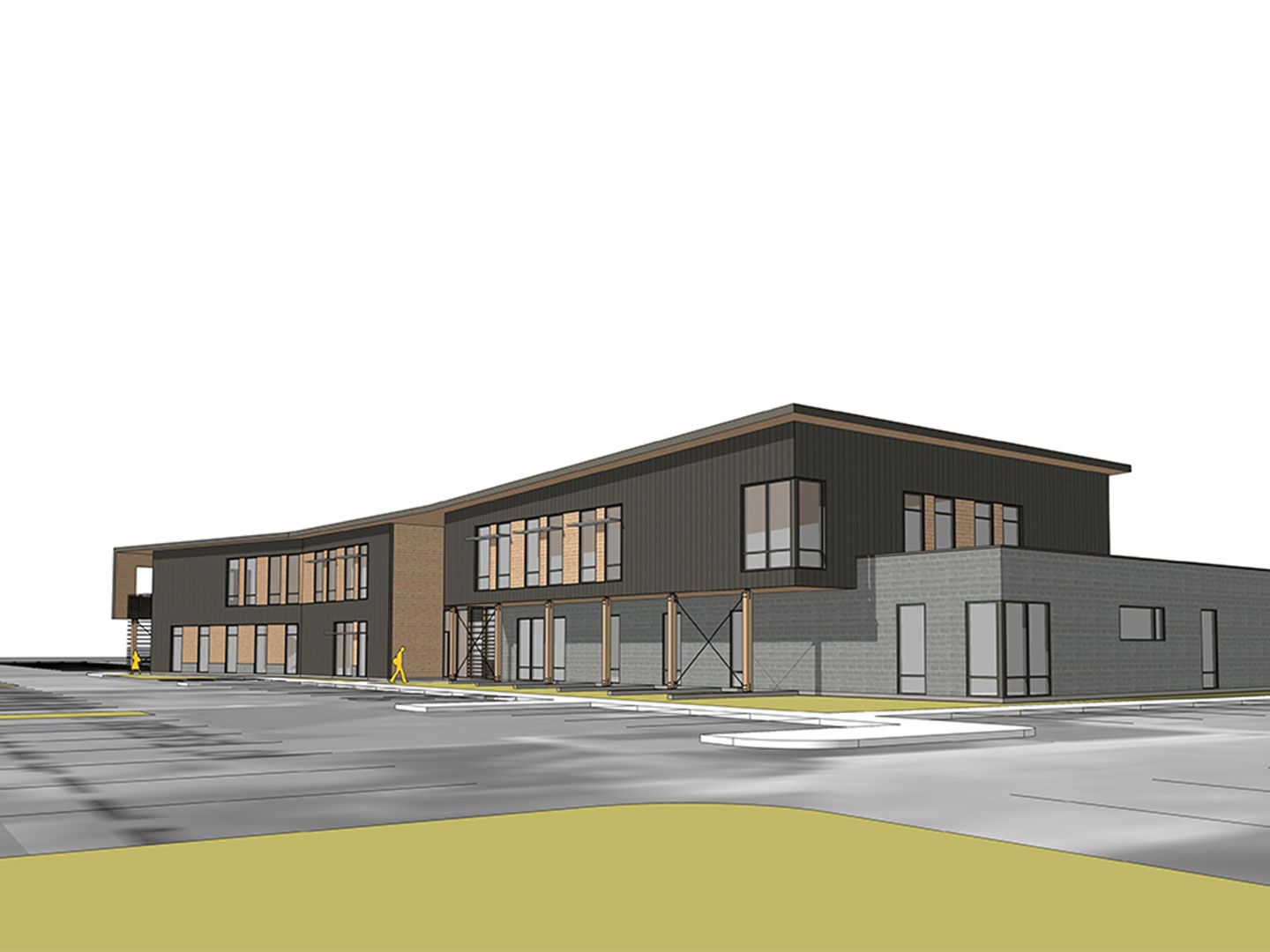
Healthcare Facility Roofing in Boise, ID
Commercial roofing for hospitals, medical offices, clinics, and healthcare facilities.
St. Luke's Health System—Idaho's largest health system, headquartered in Boise with multiple hospital campuses, medical office buildings, and specialty care facilities throughout southwestern Idaho and eastern Oregon—represents the highest level of complexity and consequence in commercial roofing work in the Treasure Valley. A healthcare roofing project at a St. Luke's campus is not simply a building maintenance task; it is a clinical operations challenge that must be planned and executed with the same rigor that the health system applies to patient care delivery, because the consequences of a roofing failure during a healthcare construction project can cascade from a wet ceiling tile to a compromised sterile field, a shut-down operating suite, and patient harm.
The defining characteristic of hospital roofing work is that the building never closes. St. Luke's Boise Medical Center operates emergency services, surgical suites, intensive care, and labor and delivery around the clock every day of the year, and the roofing contractor's activities must be planned, executed, and monitored without creating any condition that could interrupt patient care or compromise the clinical environment below the work zone. This means daily pre-construction and post-construction coordination with the hospital's infection control officer, facilities manager, and clinical operations facility lead to verify that construction activities in each work zone are compatible with clinical activities in the corresponding patient care areas below.
Infection control is the paramount safety consideration unique to healthcare roofing projects, and St. Luke's Infection Control Risk Assessment process must be completed for every phase of work before construction activity begins in that zone. ICRA protocols on hospital roofing projects require contractors to establish Infection Control Construction Barriers—typically gasketed ceiling panels and negative pressure zones in interior spaces affected by above-ceiling penetration work—and to implement continuous air quality monitoring when construction activities generate dust or debris near HVAC intake pathways. Contractors who have completed ASHE healthcare construction training and can demonstrate familiarity with ICRA protocols are required for any work involving above-ceiling access or mechanical room penetrations at St. Luke's facilities.
Medical gas systems, specialized HVAC equipment, and emergency power systems that serve critical care functions penetrate hospital roofs in configurations that do not exist in other building types. NICU isolation suites, operating rooms, and pharmacy clean rooms require HVAC systems with HEPA filtration that maintain specific pressure differentials and air change rates—pressurization schemes that can be compromised by construction activity that disturbs ductwork, penetration seals, or rooftop equipment. Contractors must obtain a comprehensive penetration inventory from the facilities team before beginning any work on a hospital roof, identify all medical gas lines, emergency generator exhaust stacks, and critical ventilation penetrations, and plan the work sequence to ensure none of these systems is disturbed without explicit clinical operations approval and a hospital-controlled shutdown procedure.
Emergency access to the building must be maintained from every direction throughout roofing construction at St. Luke's facilities. Emergency vehicle access routes to trauma bay, helipad approaches, and emergency generator fuel delivery paths cannot be blocked or degraded by material staging, equipment placement, or construction personnel traffic. Helipad decks adjacent to hospital rooftop work zones present both access maintenance requirements and technical challenges: helicopter rooftop pads require FAA-compliant surface markings, obstruction lighting, and specialized membrane systems that can withstand rotor wash forces—requirements that are absent from standard commercial roofing and must be addressed by contractors with specific helipad roofing experience.
Joint Commission compliance shapes the documentation and process requirements for healthcare construction at St. Luke's facilities. The Joint Commission's Environment of Care standards require hospitals to manage the risks associated with construction and renovation activities through a formal plan that includes hazard identification, risk mitigation measures, and monitoring throughout construction. Contractors working at Joint Commission-accredited facilities must participate in the hospital's construction risk assessment and comply with all conditions of the hospital's construction permit—an internal authorization document separate from the municipal building permit that reflects the hospital's internal safety management requirements.
Idaho building code enforced through Boise's Building Services Division requires commercial roofing permits for hospital projects, and healthcare facilities at the level of St. Luke's are subject to Facilities Guidelines Institute and Idaho Department of Health and Welfare healthcare facility standards that add requirements beyond the standard commercial building code. Projects involving structural changes, drainage modifications, or HVAC system alterations may require licensed mechanical and structural engineering review in addition to the standard roofing permit application. The health system's in-house engineering team typically manages permit applications and agency coordination for major capital projects.
Sterile environment protection during roofing construction requires physical barriers between construction activity and clinical spaces that go beyond standard construction site fencing. Temporary roof membranes installed at end of each shift, positive pressure maintenance in operating suites during adjacent rooftop construction, and air quality testing protocols coordinated with the hospital's infection control team are standard practice for contractors experienced in Idaho healthcare roofing. Any material—adhesive, sealant, or solvent—that generates volatile organic compounds must be identified in the contractor's ICRA submission before use is approved, and low-VOC product substitutions may be required for work zones adjacent to sensitive clinical spaces.
Long-term maintenance relationships with St. Luke's Health System facilities departments are built through demonstrated performance on construction projects and through the consistent delivery of inspection services that meet the health system's documentation standards. Annual comprehensive roof inspections that include written reports, photographic documentation, and prioritized repair recommendations in formats compatible with the health system's facility asset management system provide the institutional oversight that healthcare facilities facility leaders need to maintain their buildings in compliance with accreditation standards.
- Commercial Roof Coatings
- Preventive Maintenance Programs
- Energy Efficient Cool Roof Installation
- Multifamily Roofing
- Solar Roof Integration
- Acrylic Roof Coatings
- Insulation Recovery Board
- Mixed Use Roofing
Leak points, drainage, seams, penetrations, edge metal, roof access, and interior risk should be clear before the next roof decision is priced.
Immediate repair, maintenance, coating, recover, and replacement choices should be measured against roof age, moisture risk, tenant disruption, and budget timing.
A site visit is useful when the owner needs a documented roof condition, active leak response, storm review, or a clearer capital plan.