
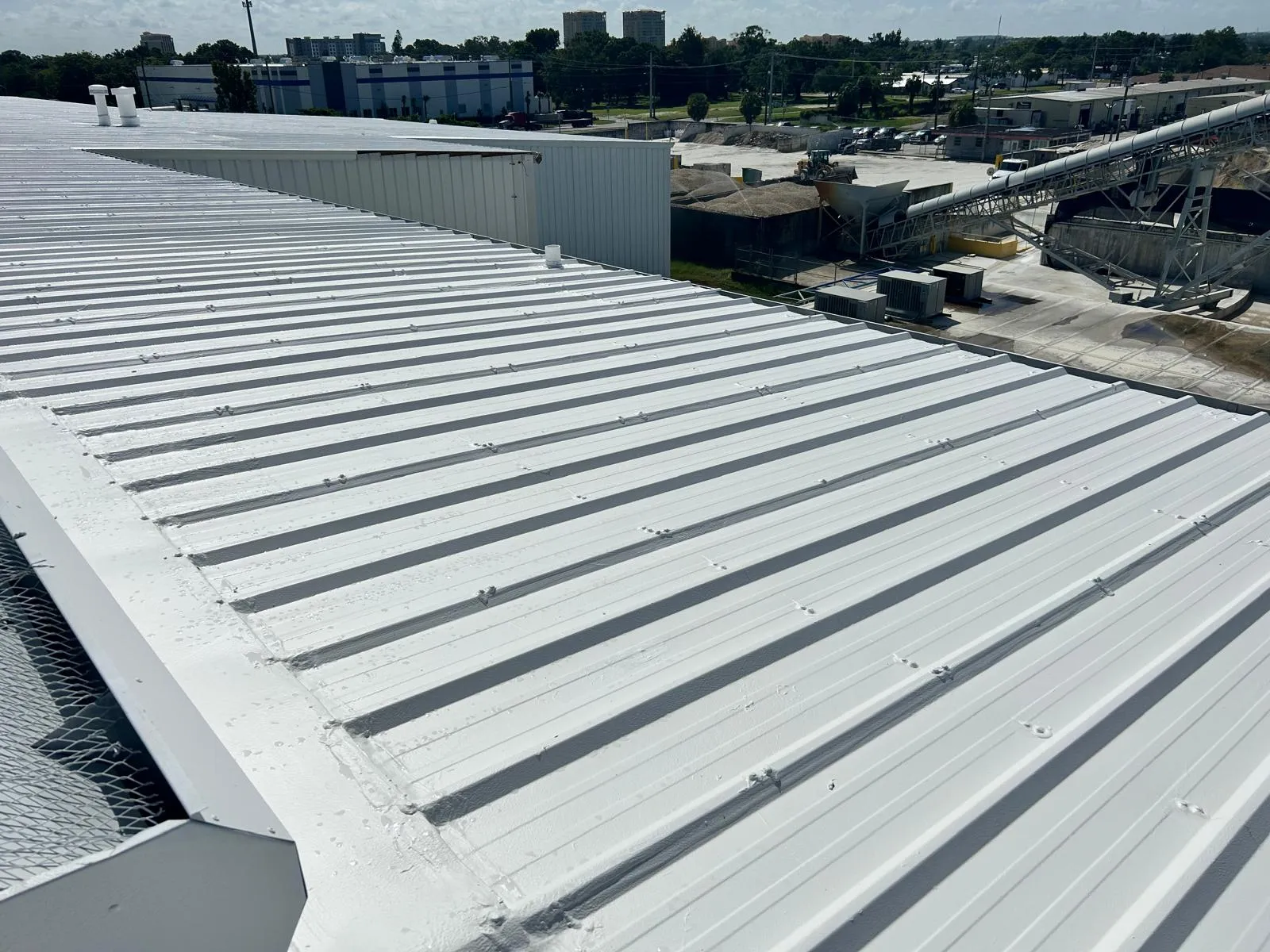
Food Processing Facility Roofing in Boise, ID
Where the roof and the food safety plan meet
Food processing puts two opposing climates against a single roof deck. Below it, washdown crews run hot water and sanitizers across the floor and equipment, refrigerated rooms hold near or below freezing, and the production floor pumps out warm, wet air on every shift. Above it sits the Treasure Valley, dry and hot in summer and well below freezing in winter. A roof assembly that ignores either side of that equation traps moisture inside itself, corrodes the deck, and soaks the insulation, often with no leak ever showing on the floor. We design food processing roofing in Boise to manage that vapor war first and to shed rain second, because over a production line the hidden failure is the dangerous one.
This is a serious slice of the local economy. Idaho food processing runs deep, and the Boise metro carries a heavy concentration of it: dairy and cheese operations feeding off the state's enormous milk supply, frozen and fresh potato processing tied to the surrounding farmland, sugar and beverage production, and the bakeries, meat operations, and cold-storage distributors clustered along the I-84 industrial corridor and out through Caldwell and Nampa. Many of these plants run continuously, which shapes everything about how roofing work gets planned.
Not every roofing material is allowed over the line
A roof over a food contact zone is a regulated surface. USDA, FDA, and state food-safety frameworks govern not just the membrane but the adhesives, primers, and sealants in the flashing details, and many standard roofing adhesives carry solvents that are simply not acceptable in a food production environment. White TPO and PVC single-ply are generally workable over enclosed processing areas, but the specific product and installation method has to be confirmed against the plant's food-safety plan rather than assumed. We identify the regulatory framework for the building and clear every material with the QA team before anything goes down over a contact zone.
Refrigerated rooms are the toughest assembly in the building
Freezer rooms, chill rooms, and blast cells are where roofing gets unforgiving. The assembly above a refrigerated space has to maintain thermal continuity to keep the cold chain intact, and it has to manage a vapor drive that, over a freezer in a Boise winter, can run hard in either direction as outdoor and indoor temperatures flip the dew point inside the assembly. Get the tapered insulation and vapor control wrong and you grow ice and condensation inside the roof itself, which corrodes the deck and destroys insulation R-value silently. We design these assemblies around the actual operating temperatures of each room and the local climate's vapor direction, not a generic warehouse detail.
Ponding water over a freezer is worse than ponding anywhere else. It adds thermal load that the refrigeration system has to fight, and it keeps the membrane and the cold deck wet, accelerating corrosion. We use tapered systems to drive water to perimeter scuppers or interior drains at the low point of each bay and confirm the drainage plan lines up with how the refrigeration below is actually running.
The production schedule drives the sequence
Most Boise-area plants run two or three shifts with a single weekly sanitation window as the only time the floor is truly down. Any work that opens the envelope over an active production area has to fit inside that window, with the QA manager and production team confirming the floor is clean and protected before we start. We phase the project around the plant's calendar, not the other way around, and we coordinate refrigeration-adjacent work with the maintenance team so nothing we do over a cold room threatens the chain below.
Water over an active line is a food-safety incident, not a maintenance call. Our emergency protocol for processing facilities pairs a 24-hour contact with priority mobilization for temporary dry-in and the documentation support the plant needs for its own incident reporting and any product-hold decision. The first call goes to your QA and facilities team so the line can be evaluated, and we move on the roof in parallel. We hand over that emergency contact path as part of every closeout.
Washdown humidity and the underside of the deck
Sanitation in a processing plant means water, and a lot of it. Crews flood floors, walls, and equipment with hot water and chemical sanitizers, and that warm, vapor-heavy air rises straight to the underside of the roof deck. Combined with the steam coming off cooking, blanching, and pasteurizing operations, it puts the bottom of the deck and the fasteners under near-constant humidity. On a steel deck that means corrosion working upward from below, and on fasteners it means a slow loss of holding power that does not show until something pulls loose. We look hard at the underside condition during any assessment, because a roof that looks fine from the top can be quietly rusting from the wet air beneath it.
That same humidity is why the insulation choice and the vapor retarder placement matter so much on these buildings. The wrong assembly lets the warm wet interior air migrate up into the insulation, where it cools, condenses, and saturates the boards, killing the R-value and feeding deck corrosion. We specify the assembly so the vapor is stopped before it can get into the layers that cannot dry out, and we pay particular attention to the transitions between high-humidity processing areas and the drier warehouse or dock spaces, because those internal boundaries are where condensation problems tend to concentrate.
Rooftop refrigeration and process loads
Food processing roofs carry weight. Refrigeration condensers, large makeup-air and exhaust units, evaporative cooling equipment, and process piping all live up top, and on plants running heavy refrigeration that equipment is substantial and runs constantly. Before we add insulation thickness or sign off on new equipment curbs, we confirm the deck and structure can carry the combined load, and we flash every penetration as its own detail. The vibration and the condensate drainage from refrigeration equipment also get attention, because a condensate line dumping onto the membrane or a poorly isolated condenser working a seam will start a leak over time in exactly the kind of building where a leak is most costly.
Documentation inspectors will ask for
Roof condition is a standard line item in USDA and FDA facility inspections. Inspectors look for evidence of leaks, condensation, and deterioration that could let moisture in over production, and a QA manager who can produce current condition documentation and repair records is in a far stronger position. We deliver that documentation in a form your team can put in front of an inspector to show the roof is being maintained proactively rather than reactively.
Built for a plant that cannot stop
If you run a dairy, a frozen-food operation, a bakery, a meat plant, or a cold-storage facility anywhere across the Treasure Valley, we are set up to work the way your building demands: regulated materials, vapor-controlled assemblies over your cold rooms, and a sequence that respects the sanitation window. Let us walk the roof, check the assembly over your refrigerated areas, and lay out a plan that protects both the building and the product moving through it.
Leak points, drainage, seams, penetrations, edge metal, roof access, and interior risk should be clear before the next roof decision is priced.
Immediate repair, maintenance, coating, recover, and replacement choices should be measured against roof age, moisture risk, tenant disruption, and budget timing.
A site visit is useful when the owner needs a documented roof condition, active leak response, storm review, or a clearer capital plan.