
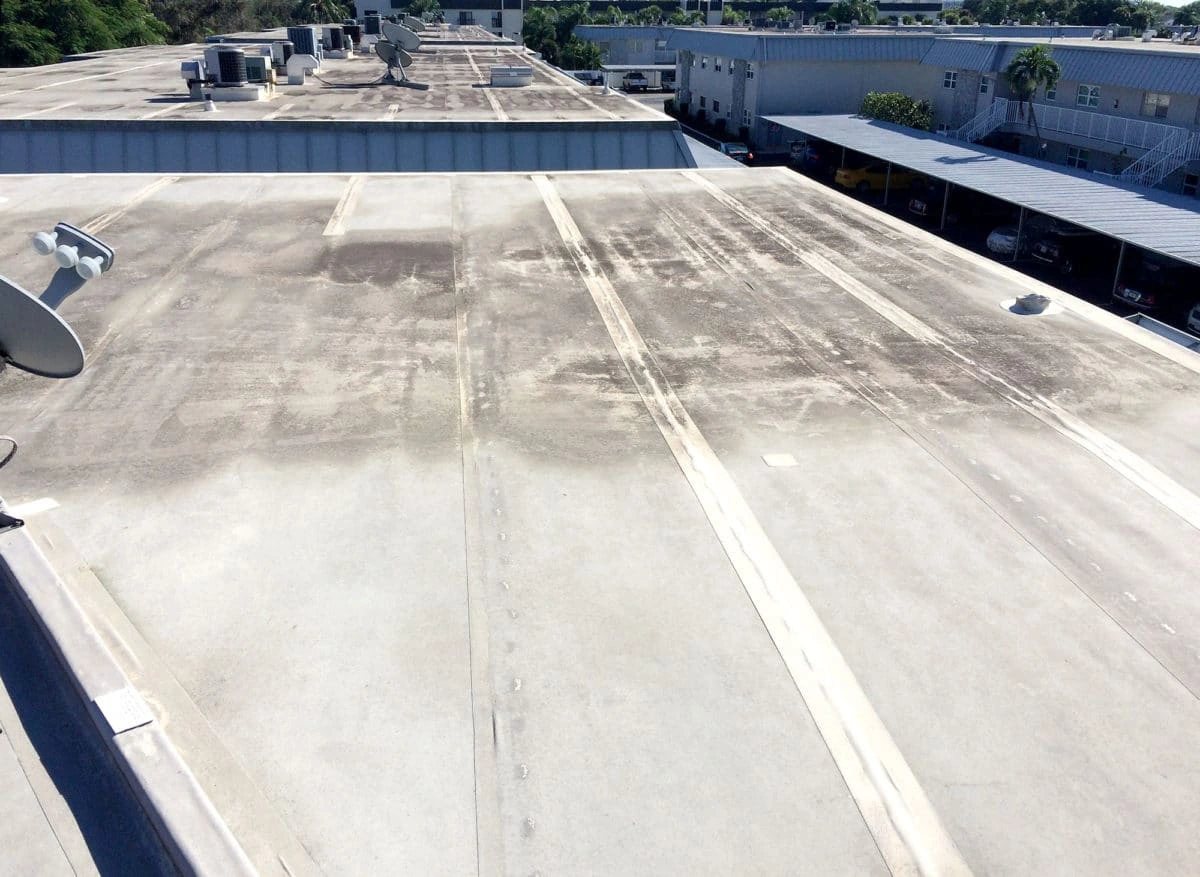
Industrial Flex Space Roofing in Boise, ID
One roof, many tenants, and a penetration for every one of them
Industrial flex is the shape-shifter of the commercial inventory. A single building might hold light manufacturing in one bay, a distribution tenant in the next, a contractor's shop beyond that, and a small office-and-lab user at the end, with those uses trading places every lease cycle. The roof has to perform through all of it: occupancy changes, tenant-improvement work, and the full range of mechanical loads that come with a tenant roster nobody can predict five years out. The defining feature of a flex roof is the sheer number of penetrations it accumulates, and managing them is the heart of the job.
Boise's flex inventory fills the light-industrial districts that have grown up around the I-84 corridor, the Gowen Field and airport business parks on the south side, the older industrial pockets in Garden City, and the newer multi-tenant developments pushing west toward Meridian and Nampa. The Treasure Valley's growth keeps these buildings churning through tenants, and every churn brings someone onto the roof to add or move equipment.
Why we survey every penetration before we touch the membrane
Multi-tenant flex creates a problem single-user industrial buildings avoid: tenant-improvement activity that adds rooftop units, cuts the membrane for new electrical and HVAC runs, and lands equipment that was never in the original loading plan, often with no record in the property file. So every flex reroof we do in Boise opens with a penetration inventory. We photograph and map each penetration, compare it to the original drawings when they exist, and flag anything non-standard or poorly sealed for remediation before new membrane goes down. This is not about contractors having cut corners. It is that flex roofs collect years of undocumented changes, and the survey is what keeps a warranty dispute from showing up later.
Decades of construction styles under one category
Boise flex buildings range from 1970s tilt-wall with aging built-up roofs to modern pre-engineered metal buildings with standing-seam panels. The right reroof depends on the deck type, the condition of the existing assembly, and how much disruption the current tenants can absorb. For tilt-wall and concrete flex, our standard is 60-mil TPO mechanically attached over new polyiso. Where rooftop equipment density is high or several tenants' HVAC contractors are constantly on the roof, 80-mil TPO or 60-mil PVC fully adhered earns its added cost in puncture and traffic resistance. Pre-engineered metal buildings often pencil out best with a standing-seam recover or a silicone-coated metal system that extends service life without a full teardown.
Boise weather on a low-slope multi-tenant roof
These roofs see the full Treasure Valley range, from heavy fastener-loading winter wind funneling through the valley to triple-digit summer heat baking a dark, aging membrane. Drainage gets a hard look on flex buildings because added curbs and equipment over the years often interrupt the original water paths and create new ponding. We correct drainage with tapered insulation and make sure edge metal, coping, and gutters can actually move the water off a roof that was modified piecemeal.
Coordinating work across tenants who do not share a schedule
Multi-tenant coordination starts with a bay-by-bay occupancy map and a lease-contact list from property management. We identify which tenants have live rooftop equipment, which bays are empty, and which tenants are sensitive to noise or HVAC downtime during the project. Sequencing and daily dry-in are coordinated through the property manager, and tenants get advance notice but communicate through management rather than directly with the crew, which keeps the project moving and the messaging consistent.
Vacancy transitions are a quiet source of leaks
Lease turnover is where flex roofs get hurt. When a tenant leaves and the HVAC units come off, the open curbs often get a temporary cap that fails within a rain event or two, and the leak shows up in an empty bay where no one is there to notice. Any flex inspection we run on a Boise building in transition confirms curb-cap status, verifies that former-tenant penetrations are properly sealed, and checks that the drains are clear, because vacant bays collect debris faster than occupied ones and clog the drainage that is already compromised.
Mismatched HVAC loads across a single membrane
The thing that makes a flex roof harder than a single-tenant industrial roof is that the load is never uniform. One bay runs a single small rooftop unit for an office buildout, the bay beside it carries heavy process exhaust and makeup air for a fabrication tenant, and a third sits nearly bare. That uneven equipment distribution means the roof sees concentrated loads and traffic in some areas and almost none in others, and the original roof was usually designed for an average that no longer reflects how the building is used. We map the actual equipment loads bay by bay during the survey and, where a tenant has added more than the deck was meant to carry, we flag it before we build a new assembly on top of a structure that is already overloaded.
That same patchwork shows up in the traffic the roof takes. Each tenant brings its own HVAC service contractor, and those crews walk the same routes to their units over and over, wearing the membrane along defined paths. On flex buildings with several active rooftop systems we specify walkway pads along the service routes and step up to a heavier membrane where foot traffic is constant, so the roof is not slowly punctured by the maintenance it needs to keep running.
Built-up and aging assemblies on older flex stock
A lot of Boise's older flex inventory still carries built-up roofing or aged modified-bitumen systems that have been patched repeatedly through tenant turnovers. These assemblies can have multiple layers in place, trapped moisture between them, and a weight that limits what can simply be added on top. On these buildings the core sample is not optional, it tells us how many layers are present, whether the insulation is wet, and whether code and structure allow a recover or require a tear-off. We give owners a straight answer on which path the building actually supports rather than defaulting to whichever is cheaper this year, because a recover over a wet built-up assembly just buries the problem for the next owner to find.
Pricing and reporting built for owners and investors
We price flex roofing per roof square based on membrane specification, existing assembly condition, penetration density, and bay configuration, with a fixed price in writing after a roof walk and a core sample where it is warranted. Owners and investors running multiple flex properties get standardized condition reports they can drop straight into a capital plan, so a whole portfolio can be budgeted on consistent data instead of one-off guesses. If you hold or manage flex space anywhere across the Boise metro, we will walk the roofs, inventory the penetrations, and give you a clear read on what each building needs and when.
Leak points, drainage, seams, penetrations, edge metal, roof access, and interior risk should be clear before the next roof decision is priced.
Immediate repair, maintenance, coating, recover, and replacement choices should be measured against roof age, moisture risk, tenant disruption, and budget timing.
A site visit is useful when the owner needs a documented roof condition, active leak response, storm review, or a clearer capital plan.