
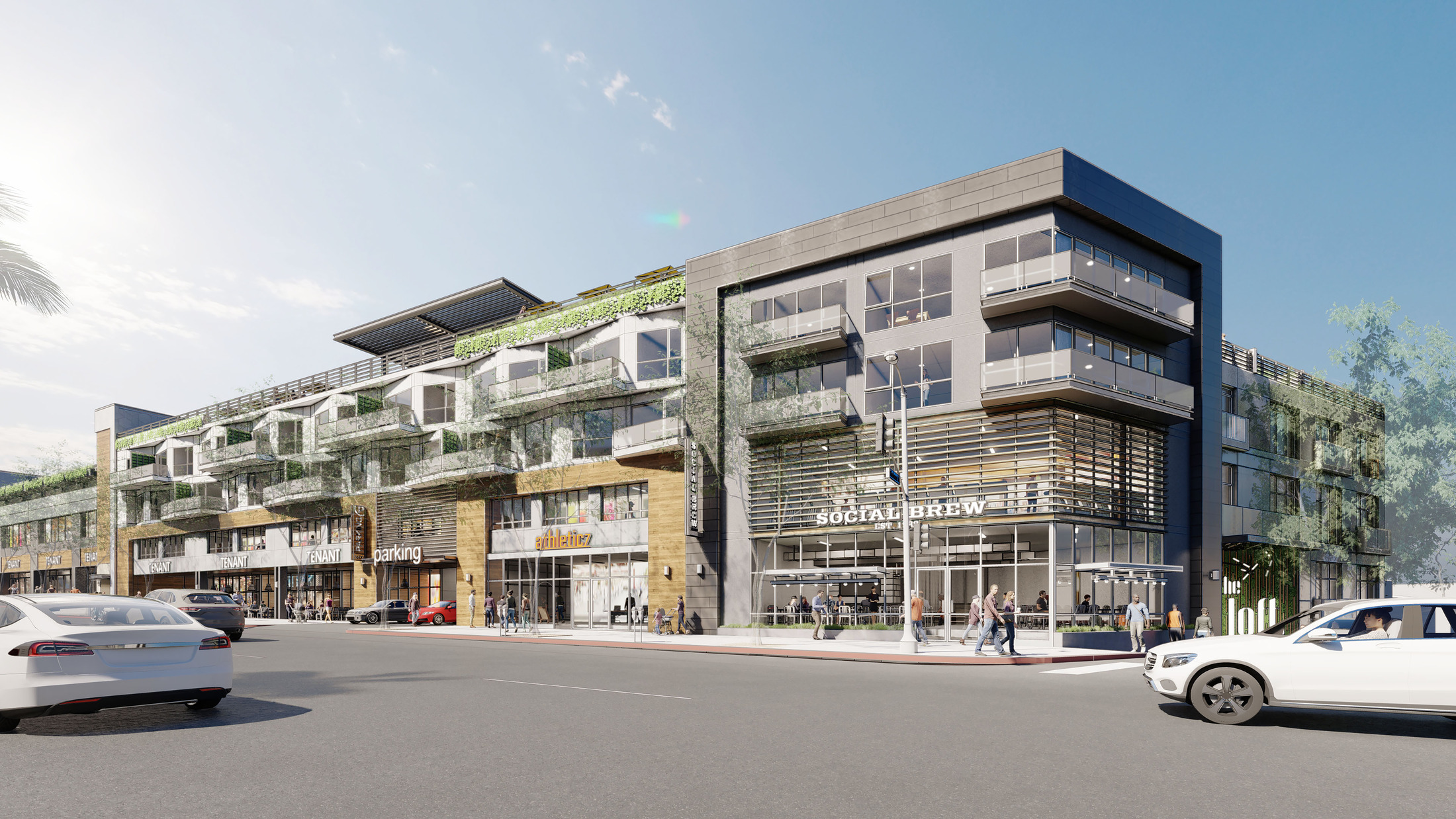
Mixed-Use Development Roofing in Boise, ID
Commercial roofing for mixed-use developments, urban infill projects, and live-work-play buildings.
8th and Main in downtown Boise — a mixed-use development anchoring the city's urban core with retail, office, and residential components stacked over a shared parking structure — represents the new generation of Boise's urban redevelopment and the roofing complexity that comes with it. Mixed-use buildings require roofing contractors to think across building envelope systems simultaneously: the commercial podium roof functions as both a roof for retail and office spaces below and a structural deck for the residential tower above, and the waterproofing standards for occupied residential space above the deck are fundamentally different from those that would apply to a pure commercial building.
Commercial versus residential roof zones in mixed-use buildings create a waterproofing performance split that must be clearly delineated in the specification and executed with corresponding precision in the field. The commercial roof zones — typically the podium roof areas not covered by the residential tower footprint — are accessible for maintenance and can be re-roofed on a standard commercial timeline. The residential zones — the waterproofing beneath occupied floors, terraces, and green roof assemblies — must be executed to a higher standard because failure consequences are immediate and serious: water in a residential unit is a habitability issue and a liability event that property managers take far more seriously than a commercial tenant reporting a ceiling stain.
Occupied residential above commercial is the defining operational constraint for roofing and waterproofing work at Boise mixed-use developments. Residents in buildings like 8th and Main expect normal occupancy conditions throughout any maintenance or repair work on the building envelope. Noise from roofing equipment, adhesive or solvent odors that infiltrate interior spaces, and dust or debris from demolition work are not simply inconveniences — they generate resident complaints, lease complications, and property management crises. Contractors must develop specific occupancy protection plans for each phase of work at occupied mixed-use buildings, including noise scheduling, odor management through water-based adhesives or other low-emission products, and positive-pressure exhaust management to prevent odor infiltration into residential corridors and units.
Terrace and deck waterproofing at Boise mixed-use buildings requires a specialized skill set that overlaps with but is distinct from standard commercial membrane roofing. Occupied terraces — where residents walk, place furniture, and install planters — have surface finish requirements that commercial roofs do not. Waterproofing beneath pavers, tile, or synthetic turf decking systems must be installed as a true vehicular or pedestrian-rated assembly with traffic-bearing wear surfaces and the drainage mat, protection board, and root barrier components required for planted elements. Contractors who attempt to use standard commercial roofing membrane as the waterproofing layer beneath a paver terrace system are setting up a premature failure scenario, because standard membranes are not designed for the point loads and moisture cycling of pedestrian terrace applications.
Green roof assemblies at Boise mixed-use developments serve both amenity and sustainability functions. Residents in the Treasure Valley's growing urban residential market increasingly expect outdoor green amenities, and property managers market rooftop green spaces as premium residential features. These assemblies require specialized design that accounts for Boise's semi-arid climate — irrigation system integration, drought-tolerant plant selection, and substrate depth calibrated to local evapotranspiration rates — alongside standard green roof waterproofing and root barrier components. Contractors who can install the waterproofing assembly and coordinate with a landscape architect on the growing medium and planting plan provide full-service value that property developers increasingly demand.
Building envelope continuity at mixed-use buildings requires the roofing contractor to coordinate with the waterproofing, facade, and window wall contractors who are managing the vertical building envelope. The transitions between the horizontal waterproofing system and the vertical facade system — at parapet walls, at balcony slab edges, and at window head flashings — are the most vulnerable points in the entire building envelope, and they require joint design and coordinated installation to achieve true continuity. Projects where the roofing contractor installs their system up to a line and calls it done, without coordinating the transition to the facade contractor's scope, consistently generate the building envelope failures that generate the largest and most contentious warranty claims.
Boise's rapid urban growth has created a large inventory of recently-completed mixed-use buildings in the downtown core and adjacent neighborhoods, and the first wave of these buildings is reaching the age at which deferred maintenance and original-construction warranty claims are creating active roofing scopes. Property management companies overseeing these buildings often lack the institutional knowledge to evaluate roofing contractor proposals effectively, and they benefit significantly from contractors who invest time in educating them on the specific performance requirements of mixed-use building envelope systems rather than simply providing a price to re-roof the lowest common denominator scope.
Drain design at Boise mixed-use developments must account for the building's combined drainage system, which typically handles both the commercial and residential roof zones through a shared internal drain network. Blockage in this network affects both zones simultaneously, and the drainage capacity at the commercial podium must be adequate for the worst-case rainfall intensity during Treasure Valley summer thunderstorm events. Contractors specifying drain covers for mixed-use buildings should confirm that their specifications are compatible with the building's drain pipe sizing before installation, because standard commercial drain covers specify for standard commercial drain pipe dimensions that may differ from the higher-capacity pipe used in the building's shared drainage system.
Long-term maintenance planning at Boise mixed-use buildings benefits from a single-source maintenance program that covers both the commercial and residential waterproofing zones under one service relationship. Property managers who engage the same contractor for both zones benefit from consistent condition tracking, unified warranty management, and the ability to address issues that span both zones — a parapet condition that affects both the residential terrace above and the commercial lobby ceiling below, for example — under one service event rather than two separate contract mobilizations.
- Roof Tear Off Replacement
- Skylight Penetration Flashing
- Manufacturing Facility Roofing
- Government Building Roofing
- PVC Roofing
- Commercial Roof Leak Repair
- School Roofing
- Drone Roof Inspection
Leak points, drainage, seams, penetrations, edge metal, roof access, and interior risk should be clear before the next roof decision is priced.
Immediate repair, maintenance, coating, recover, and replacement choices should be measured against roof age, moisture risk, tenant disruption, and budget timing.
A site visit is useful when the owner needs a documented roof condition, active leak response, storm review, or a clearer capital plan.